How Social Media Can Affect Your Personal Injury Case
When it comes to personal injury claims, it may seem like you should rely solely on medical records, accident reports, and other evidence. But how social media can impact your personal injury case may be more important than you might think. A single photo, caption, comment, or video can sometimes raise questions about the seriousness of your personal injury claim.
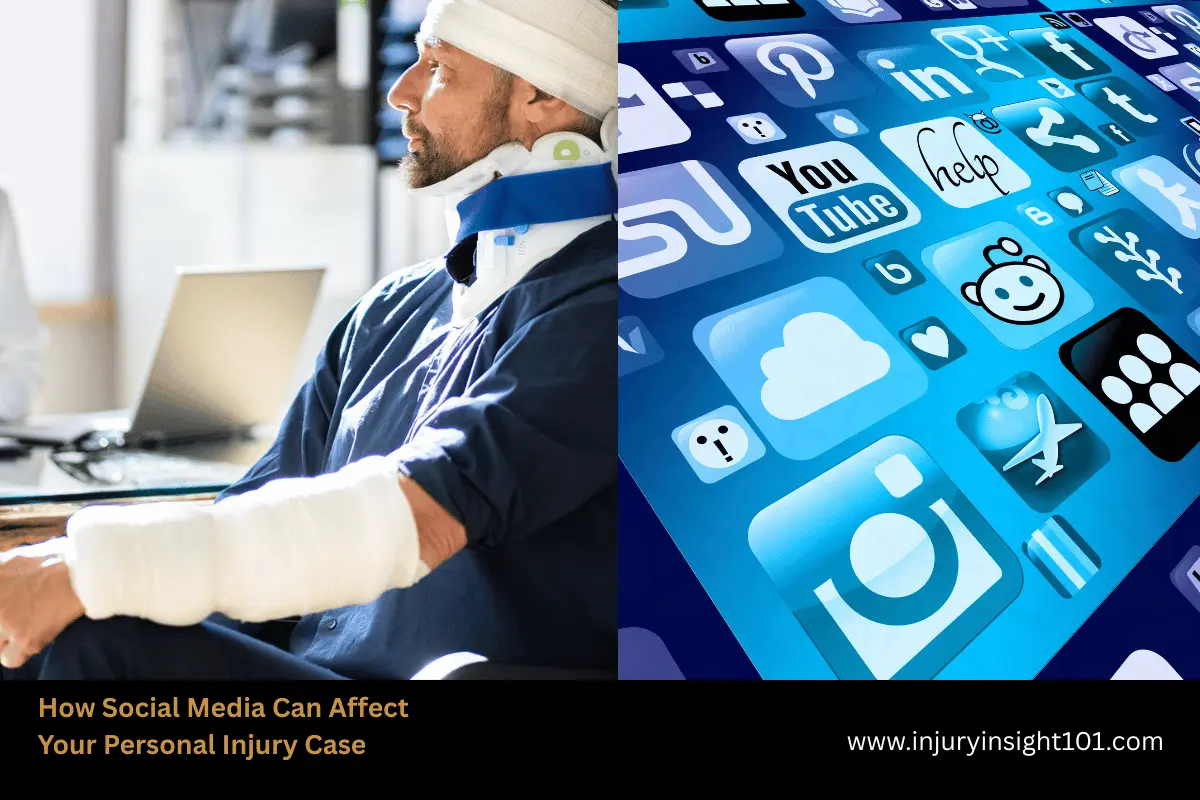
Even a simple post about spending time outdoors or doing some physical activity can be viewed differently when compared to the injuries you describe. This is why social media evidence has become an important consideration in many California personal injury cases.
What you share online can be seen by an insurance company, the opposing party, or anyone else involved in the claim. However, a social media post does not automatically prove that your injuries were minor or that your claim has no basis.
The timing, context, and circumstances of the post can all be important. Understanding what to post, what to avoid, and how to preserve relevant information can help you avoid unnecessary complications during your claim.
How Social Media Can Impact Your Personal Injury Case
Social media can become an unexpected part of a personal injury claim. After an accident, you may continue to use Facebook, Instagram, TikTok, or other platforms without realizing that your online activity could be relevant to your case. However, posts, photos, videos, comments, and other content may be reviewed when they relate to your claimed injuries, physical limitations, or recovery.
A major concern is credibility. For example, if you claim that a car accident caused you severe back pain that has limited your ability to walk, but a later social media post shows you participating in some kind of physical activity, the other party could use that post to question your statement. This does not automatically prove that your injuries were minor or that you are not entitled to compensation. The post must be considered in light of its context, timing, and circumstances.
Online content may also conflict with your medical records, testimony, or statements you have made to an insurance company. For example, if you are simultaneously claiming serious ongoing symptoms, a caption like "You're feeling completely fine" may raise questions. Even jokes or casual comments can often be misinterpreted if taken out of context.
In California civil cases, discovery is used to gather information and evidence that may be helpful in proving or disproving a claim. California Courts have explained that discovery may be used to gather information and documents that may be used as evidence in a case. Therefore, social media should not be automatically considered separate from evidence involved in a personal injury case.
How social media can be used as evidence
Social media content can provide information about what happened after an accident, how an injury affected someone’s daily life, and whether an online statement is consistent with other evidence. Depending on the situation, relevant content may include:
Photos and videos:
Photos or videos showing your physical condition, activities, travel, exercise, work, or daily activities may be relevant if they relate to your claimed injury or limitation.
Posts, captions, and comments:
Written statements about the accident, pain, treatment, recovery, or physical abilities can be compared with other evidence in the case.
Check-ins and location information:
A location tag can tell you where you were on a specific date. Its significance depends on what it actually proves or disproves.
Posts about physical activity:
Content showing sports, exercise, weightlifting, dancing, hiking, traveling, or other activities may be examined when your claimed injuries involve limitations related to those activities.
Other electronically stored information:
Depending on the circumstances and applicable discovery rules, electronically stored information may be included in the broader category of documents or evidence that may be requested.
The California Courts explain that a ‘Request for Production’ can be used to subpoena documents and items from another party in a civil case. The California Courts’ Guidelines define the term ‘documents’ broadly, including images and electronically stored information.
However, this does not mean that every part of someone’s social media account is automatically relevant. Discovery is generally directed only at information that is relevant to the issues in the case. California courts have noted that a person may object to discovery that is irrelevant or would create an unreasonable burden or expense.
Social media evidence may also involve confidentiality and procedural requirements, particularly when information is sought from someone who is not a party to the case. California courts have noted that special protections may apply when a subpoena seeks social media, email, text, or similar communication information.
Social Media Posts That Could Hurt Your Personal Injury Claim
Not all social media posts are problematic. Concerns usually arise when online content seems disproportionate to your claimed injury, limitation, or loss. Therefore, several types of posts can attract undue attention.
Pictures or videos showing physical activity
Pictures or videos of you exercising, playing sports, lifting heavy objects, traveling, dancing, or doing other physical activities may be questionable if you claim that your injury prevents or significantly limits those activities.
However, the existence of such a post does not necessarily prove that you have fully recovered. A person may experience temporary improvements, be able to perform an activity despite pain, or participate in activities that do not reflect their overall physical condition. The date, duration, intensity, and circumstances of the activity may be important.

Posts that make your injury appear less severe
A statement such as "I'm fine" or a picture of you smiling at an event could potentially be interpreted as evidence that you were not seriously injured. But a picture or brief statement usually doesn’t paint a complete picture of someone’s physical condition.
For example, someone may attend a family event for a short time but may experience severe pain before or after. Circumstantial evidence—such as medical records, medical history, and testimony—can provide additional context.
Statements that contradict medical records or previous statements
Inconsistencies can raise questions about credibility. If your social media post describes an injury differently than what’s in your medical records or what you’ve previously told an insurer, the other party can point to that discrepancy.
For example, saying online that you were injured in a particular incident, when your medical records state a different cause, may raise questions about causality. Similarly, claiming to be unable to do a particular task while simultaneously posting evidence that paints the opposite picture may require explanation.
Travel, sports, exercise, or recreational posts
Posts about vacations, sporting events, exercise, outdoor activities, or recreational activities can attract attention when they seem to be related to your claimed physical limitations. Again, context is important. Traveling does not mean a person is pain-free, and attending an event does not mean they will be able to do all normal activities.
Comments about accidents, injuries, or recovery
Avoid assuming general comments are harmless. Statements about what happened, how you were injured, how much pain you are in, or how quickly you recovered—these can be compared to other evidence.
For this reason, it is generally important to be accurate and consistent when discussing your accident and injury online. If a post is already public and relevant to your claim, do not assume that deleting or changing it is the right solution. It can be important to preserve potentially relevant evidence during litigation.
Above all, a social media post should be evaluated in its context, not in isolation. California's discovery rules focus on information relevant to the issues in the case, and California courts recognize that the purpose of discovery is to gather evidence that can help prove or disprove a claim.
Can an insurance company access your social media?
An insurance company may review publicly available social media content when evaluating a personal injury claim. Public photos, videos, comments, captions, and other information can sometimes provide detailed information about your activities, physical condition, travel, or statements about the accident. Insurers may seek information that they believe is relevant to the injury or loss being claimed.
However, having a personal social media account does not mean that everything posted there is outside the scope of a legal claim. If a personal injury lawsuit is filed, relevant information may be subject to civil discovery. California courts have explained that discovery allows parties to gather information and documents that can be used as evidence in a civil case.
This does not mean that an insurance company or opposing party automatically has the right to unfettered access to someone’s entire social media account. The information generally needs to have a connection to the issues involved in the case. California’s discovery rules allow for objections when a request is irrelevant, unduly burdensome, or otherwise inappropriate.
Public vs. Private Social Media Accounts
Public posts are generally viewable without requiring special access to the account. Private accounts, on the other hand, limit who can directly view their content. However, if relevant information is otherwise discoverable, privacy settings do not necessarily prevent that information from being part of discovery.
California courts have recognized that social media and electronic communications can raise privacy concerns. When information is sought through a subpoena, additional procedural requirements and safeguards may apply, especially when the information belongs to a non-party.
The important distinction is between privacy and discoverability. Making an account private does not automatically make relevant evidence legally protected from discovery, but it also does not give the adversary unlimited authority to examine everything on the account.
Should You Delete Social Media Posts After an Accident?
Deleting or editing social media content can create additional problems not only because it can affect your personal injury claim, but also because it can affect your ability to determine what was originally posted and when it was posted.
When there is a reasonable prospect of litigation, preserving evidence becomes especially important. Electronically Stored Information (ESI) can include digital material such as images, messages, and other electronic records. California’s discovery rules address electronically stored information and allow parties to seek out relevant information through appropriate discovery procedures.
This does not mean that you have to keep every social media post forever or that every old post will automatically become evidence. The concern is intentionally altering or destroying potentially relevant information because you believe it could harm your claim.
For example, suppose you posted a photo shortly after an accident in which you appear to be participating in an activity that may be relevant to your claimed injuries. Deleting the photo after filing a claim may raise questions that would not have arisen if the original information had been preserved.
If you are concerned about a particular post, photo, message, or video, it is generally safer to preserve the original content and discuss it with your personal injury lawyer before deleting, editing, hiding, or otherwise altering it. Your lawyer can assess whether the information is relevant and what preservation obligations may apply to your specific case.
You should also refrain from creating a misleading record by changing captions, cropping photos, changing timestamps, or editing videos to omit information that may be relevant. The purpose of this is not to present your social media account in a favorable light; rather, it is to avoid unnecessarily altering potentially relevant evidence.

What should you avoid posting during a personal injury case?
Once your personal injury case is active, it’s wise to be careful about what you share online. Even an innocuous post can create confusion if it’s later taken out of context.
Avoid discussing the accident in detail
Don’t use social media to give detailed accounts of what happened in the accident. Statements about how the collision occurred, who was at fault, what you were doing, or what you saw may later be compared to your accident report, medical records, testimony, or other evidence.
If you need to contact your lawyer about your case, use the communication methods your lawyer recommends instead of discussing sensitive details of the case publicly.
Avoid making statements about your injuries or recovery
Be careful not to make comments like “I’m completely recovered,” “I’m fine,” or similar when your case involves ongoing pain, limitations, or medical issues. At the same time, avoid exaggerating your symptoms online.
The safest approach is to be truthful and consistent. Your social media posts should not portray your actual physical condition or the information documented by your healthcare providers.
Avoid posting about settlement negotiations or your claims
Do not publicly discuss your personal injury settlement proposals, claims, negotiations, or other details. Sharing this information can create unnecessary complications and reveal information you did not intend to make public.
The same caution applies to emails, messages, legal documents, or screenshots of communications with your attorney, insurer, or adversary.
Be careful with photos and videos showing physical activity
Think carefully before posting photos or videos of yourself working out, playing sports, lifting weights, dancing, hiking, vacationing, or other physical activities. Such content may be interpreted as inconsistent with your claimed physical limitations.
However, participating in an activity does not automatically prove that you have recovered or that your injury is minor. The date, circumstances, duration, and nature of the activity should be considered along with medical evidence and other information.
Avoid arguing with the other party or discussing witnesses
Do not use social media to attack the other driver, blame witnesses, threaten anyone, or argue about who caused the accident. Emotional posts can potentially become part of the evidence and distract from the facts of the claim.
You should also refrain from publicly discussing what a witness allegedly saw or what another person told you about the accident. Such posts can create unnecessary debate about the statement and credibility.
Ask friends and family not to post or tag you
Your own account is not the only source of potentially relevant social media content. Friends and family members may upload photos, videos, or comments that show you involved. They may also tag you in posts that show activity that could be mistakenly interpreted as related to your injury.
You can politely ask people close to you to refrain from posting about your accident, injury, treatment, or activity related to your claim without first talking to you. However, you should not ask anyone to destroy or alter potentially relevant evidence.
The key is to be cautious and not panic. Social media does not automatically harm a personal injury claim. What matters is that the content is relevant, accurate, and consistent with the facts and evidence of the case. If you are unsure about a particular post or whether it should be preserved, talk to your lawyer before taking any action.
What should you do with your social media during a personal injury claim?
There is no obligation for you to completely stop using social media after an accident. However, once your personal injury claim is filed, it is important to use your accounts carefully and avoid creating unnecessary evidence that could be misinterpreted.
Review your privacy settings
Check the privacy settings on your social media accounts and understand who can see your posts, photos, videos and other information. Privacy settings can help control who sees your content, but they should not be considered a way to protect potentially relevant information from discovery.
Save potentially relevant posts and messages
If you have any posts, photos, videos, comments or messages that may be related to your accident, injury, treatment or recovery, save them in their original form. Don’t edit or delete potentially relevant content just because you are worried about how it will look.
California’s discovery rules can include relevant electronically stored information (ESI), so it can be important to preserve potentially relevant digital evidence in the event of a lawsuit.
Think carefully before posting new content
Before posting anything during your claim, consider whether someone could interpret it differently than you intended. This is especially important for posts about physical activity, travel, work, exercise, or your health and recovery.
You don’t have to stop living your normal life just because you have a claim. The important thing is to avoid posting content that is misleading or inconsistent with your true circumstances.
Be wary of unfamiliar friend or follower requests
Avoid accepting unnecessary friend or follower requests from people you don’t know, especially if you suspect someone is trying to gather information about your claim.
You shouldn’t assume that every stranger request is relevant to your case, but there’s no reason to give strangers additional access to personal information while a claim is pending.
Notify your attorney about relevant social media content
If you’ve posted something that could potentially be relevant to your accident or injury, let your personal injury attorney know without trying to hide or delete it. Your attorney can evaluate the content in light of your medical records, testimony, and other evidence.
Being open about potentially problematic information can also help your attorney prepare for questions raised by the insurance company or opposing party.
Keep your online activity consistent with your claims
Your social media activity should not conflict with the claims you make about your injuries, limitations, or recovery. At the same time, no single photo or activity paints a complete picture of your physical condition.
The best way is to be truthful, avoid exaggeration, preserve relevant evidence, and think carefully before posting.
Conclusion
Social media can become relevant evidence in California personal injury cases, especially when the online content relates to an accident, injury, physical disability, treatment, or recovery. Photos, videos, comments, and other digital information can sometimes be compared with medical records, testimony, and other evidence.
The safest approach is not to panic or try to make your social media account look perfect. Instead, be truthful, avoid unnecessary discussions about your claim, save potentially relevant content, and think carefully before posting anything new. If you are unsure whether a particular post, message, photo, or video could affect your claim, talk to your attorney before deleting, editing, or changing it.
Frequently Asked Questions About Social Media and Personal Injury Litigation
Can social media posts affect my personal injury claim?
Yes. Relevant social media posts, photos, videos, comments or other digital content may be considered evidence if they relate to your injury, physical limitations, accident or claimed damages. Their significance depends on the content and the surrounding circumstances.
Can an insurance company use my social media posts against me?
An insurer may review publicly available social media content when assessing a claim. If a post appears to be inconsistent with your claimed injury or limitations, the insurer may use it to question your claim. However, a post should be considered in its context, rather than automatically being treated as evidence that your injuries were not serious.
Should I delete social media posts after an accident?
Your potentially relevant posts should not be automatically deleted or edited after an accident. Deleting or changing information that could become evidence can create additional problems. If you are concerned about a particular post, save it and discuss it with your lawyer before taking action.
Can private social media posts be used in a personal injury case?
Private does not mean it can be kept private. If a private post contains information relevant to the subject matter of the case, it may be subject to search under applicable law. However, a search request is not unlimited and can be challenged when it seeks irrelevant or unduly burdensome information.
Should I stop posting on social media during my injury claim?
Of course not. You can continue to use social media, but it is wise to be careful about what you share. Avoid discussing the accident, settlement negotiations, or detailed information about your injury, and think carefully before posting photos or videos that could be misinterpreted as related to your claim.