California Motorcycle Crash: What Should You Do Next
A California motorcycle crash can completely change a rider's life in a matter of seconds. But treating the injuries after an accident isn't the end of the story. What you say afterward, what evidence you preserve, what you tell the insurance company, and how you take a stand about your own fault—all of these things can have a big impact on your motorcycle accident claim later on.
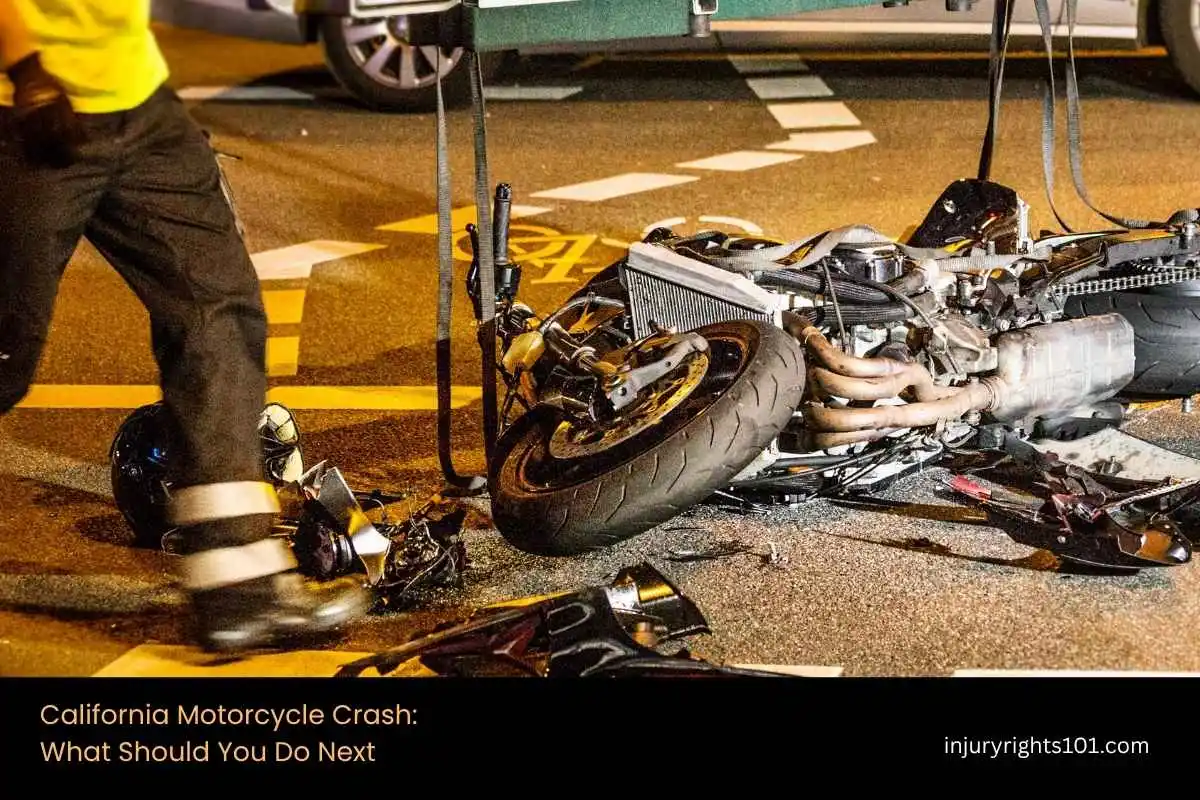
More importantly, even if the accident doesn't seem to be your fault, the other party or insurance company may interpret it differently. Even if the rider is at fault, your chances of getting compensation under California law are not completely gone. So who is liable, how much compensation can be obtained, and which California motorcycle laws may affect your claim.
In this article, learn exactly what to do after a California motorcycle crash, how to gather evidence, how liability and comparative negligence work, what damages can be claimed, and what important legal deadlines you need to know before filing a motorcycle accident claim.
What Should You Do Immediately After a Motorcycle Crash in California
The first few minutes after a motorcycle crash in California are crucial. Your main goal should be to ensure your safety, get the necessary medical care, and document the incident in a way that will help you prove your motorcycle accident claim later. California law also creates certain reporting and information-exchange requirements after an accident.
1. Call 911 and Report the Crash
If someone is injured in the accident or needs emergency assistance, call 911. According to California DMV guidelines, 911 should be called immediately if someone is injured in a collision. If no one is injured and it is safe to do so, the motorcycle can be moved out of traffic. [California DMV QR Code]
In the event of a crash resulting in injury or death, California Vehicle Code § 20008 requires the driver to file a written report with the California Highway Patrol (CHP) or, if the accident occurred in a city, the CHP or the city's police department within 24 hours of the accident. [Justia Law]
For a police report, be clear about what happened at the scene. Don't make assumptions about something you're not sure about. Similarly, it's safer to stick to the facts rather than overstating the other driver's fault.
2. Seek Medical Treatment Even If Injuries Seem Minor
Some injuries may not be immediately apparent after a motorcycle crash due to the adrenaline rush. So it's important to seek medical evaluation immediately if you have pain or other symptoms.
Medical records can be important evidence to document your injury, treatment, and medical expenses later. Be sure to tell your doctor exactly what symptoms you experienced after the accident and where the injury occurred.
When seeking medical attention, you should not just make up symptoms to claim. The healthcare provider's clinical assessment of your medical condition is the most important.
3. Move to a Safe Location if Possible
If you are physically able after an accident and it is not safe to stay there, try to move to a safe location away from traffic. However, if you have a serious injury or if you think moving could worsen the injury, do not move the motorcycle or your position unnecessarily.
The California DMV also advises that if no one is injured, the vehicle may be moved out of traffic after a collision.
4. Exchange Driver, Vehicle, and Insurance Information
Exchange necessary information with the other driver. California Vehicle Law § 16025 requires drivers involved in an accident, unless they are incapacitated, to exchange certain information with the other driver or property owner at the scene. This includes the driver's name, current residence address, driver's license number, vehicle identification information, and registered owner's address. If you have insurance, you should also provide the name, address, and policy number of your insurance company.
So, if possible, collect:
- Driver's full name and contact/address information
- Driver's license number
- Vehicle license plate and VIN
- Registered owner information
- Insurance company name
- Insurance policy number
- Required vehicle information
However, when exchanging information, it is not necessary to argue about fault or admit your own fault. It is your responsibility to exchange the necessary information and properly document the incident.
5. Document the Crash Scene and Collect Evidence
If possible, take photos and video of the scene before police or emergency personnel arrive and for your own safety. Specifically photograph:
- Damage to the motorcycle
- Damage to other vehicles
- Your visible injuries
- Road conditions and pavement
- Traffic signs and signals
- Lane markings
- Skid marks or debris
- Location of the motorcycle and other vehicles
- Nearby intersections, roadways, and relevant surroundings
If there were any witnesses to the accident, collect their name and contact information. Independent witnesses or scene evidence can be important if liability is disputed later.
However, if there are serious injuries, do not delay seeking medical care to obtain photographs or evidence. If there is a possibility that there is surveillance or traffic-camera footage from the area, consider preserving it immediately, as some recordings may not be available after a certain period of time.
6. Avoid Admitting Fault or Giving Unnecessary Statements to Insurers
Avoid saying "I was at fault" to the other driver, the insurer, or anyone else after an accident. Even if you think you may have some responsibility for the accident, do not try to determine liability on the spot.
When communicating with the insurance company regarding a claim, provide accurate information about the incident, but do not make assumptions, speculation, or unnecessary comments. Before making any statements, especially if there is an injury claim, it is important to understand what information is required and how to provide it.
Keep in mind that in California, even if a motorcyclist is at fault, their claim does not automatically end. California's "pure comparative neglect" rules can affect the percentage of fault compensation—a topic discussed in more detail later in this article.
7. File an SR-1 With the California DMV Within 10 Days When Required
One important thing to note about the SR-1 is that it is not a substitute for a police report. According to the California DMV, if a person is injured or killed, no matter how minor the injury, or if property damage exceeds $1,000, the driver must file an SR-1 with the DMV within 10 days. This requirement does not depend on who was at fault for the accident.
That is, even if the other driver was fully responsible, you may still have your own SR-1 filing requirement. The DMV also clarified that filing an SR-1 is in addition to reporting to the police, CHP, or insurance company; any other report does not satisfy the SR-1 requirement. The SR-1 can be filed by you or through an insurance agent, broker, or legal representative.
Official DMV resource: California DMV — Report of Traffic Accident (SR-1)
Finally, don't just stop with a police report after a crash. Keep medical records, photographs, witness information, insurance details, and other evidence safe. They can be important in evaluating liability and motorcycle injury claims later.
Read more:
Rear-Ended in California — What You're Owed and How to Claim It
How Much Compensation Are You Entitled to After a Car Accident in California?
How to File a Claim After a Bicycle Accident: Step-by-step complete guide
What Evidence Can Prove Fault in a California Motorcycle Crash?
A California motorcycle crash doesn't just depend on a driver's statement to determine who is at fault. Police reports, photographs, witness statements, vehicle damage, road conditions, and traffic-law violations—all of which can be combined to determine liability. The California DMV also considers factors such as road conditions, speed, traffic controls, vehicle condition, point of impact, visibility, damage, injuries, and Vehicle Code violations when assessing collision responsibility.
Police Reports and Accident Records
A police report can be important evidence, as it usually includes the location, date, time, vehicles involved, injuries, and officer observations of the crash. If the report mentions a traffic violation or possible driver responsibility, that can also be relevant to a claim.
However, a police report does not automatically prove liability. The report must also be compared with other evidence.
Photos, Videos, Dashcam, and Surveillance Footage
Photographs and videos of a crash scene can show many important things, such as the point of impact of the motorcycle and other vehicles, vehicle damage, lane position, traffic signs, road conditions, debris, or skid marks.
Dashcam footage, surveillance video from nearby businesses, or traffic camera footage can help clarify the sequence of events. So it is important to try to identify and preserve relevant footage as soon as possible after a crash.
Witness Statements
Statements from independent witnesses can be helpful in a liability dispute. What the witness saw—such as whether the other driver signaled, made an unsafe lane change, or made a sudden turn in front of the motorcycle—can be important information.
If possible, the witness's name, phone number, and contact information should be collected.
Motorcycle and Vehicle Damage
Where and how the two vehicles were damaged can provide important physical evidence about how the crash occurred. The location of front, rear, or side damage to the motorcycle and damage to other vehicles can help determine the point of impact and collision direction.
Therefore, it is a good idea to keep clear photographs of the damage and necessary inspection records before attempting to repair the motorcycle.
Skid Marks, Debris, Road Conditions, and Other Physical Evidence
Skid marks, debris, damaged traffic signs, lane markings, visibility, weather, and pavement conditions on the road can also be important in determining fault. The California DMV considers factors such as road surface, weather, visibility, traffic controls, and direction of travel in determining collision responsibility.
Medical Records and Injury Documentation
Medical records do not directly prove the fault of the other driver, but they are important in documenting whether the crash resulted in an injury, the severity of the injury, and the need for treatment. Therefore, records of emergency treatment, doctor's evaluation, diagnostic tests, and follow-up treatment should be kept.
Traffic Violations and California Vehicle Code
If a driver committed speeding, unsafe lane changes, failure to yield, distracted driving, or other traffic violations, that violation can be an important part of the fault analysis. The California DMV also considers vehicle code violations in determining collision responsibility.
For example, the right-of-way, speed, or lane-use provisions of the California Vehicle Code may be relevant depending on the circumstances of the accident. So, instead of simply saying "the other driver made a mistake," it is more important to show evidence of the traffic rule that was broken and how it connected to the crash.
Expert Testimony and Accident Reconstruction
If the crash is complex or the two parties' statements are contradictory, an accident reconstruction expert can evaluate how the collision occurred by analyzing photographs, vehicle damage, roadway evidence, and other available data.
Not all claims require an expert. However, expert analysis can be important if there is serious injury, disputed liability, or multiple vehicles involved.
The bottom line: In a motorcycle accident claim, the basis for establishing fault is strengthened when the police report + photographs/videos + witnesses + physical evidence + medical records + applicable traffic laws are presented together, rather than relying on a single piece of evidence.
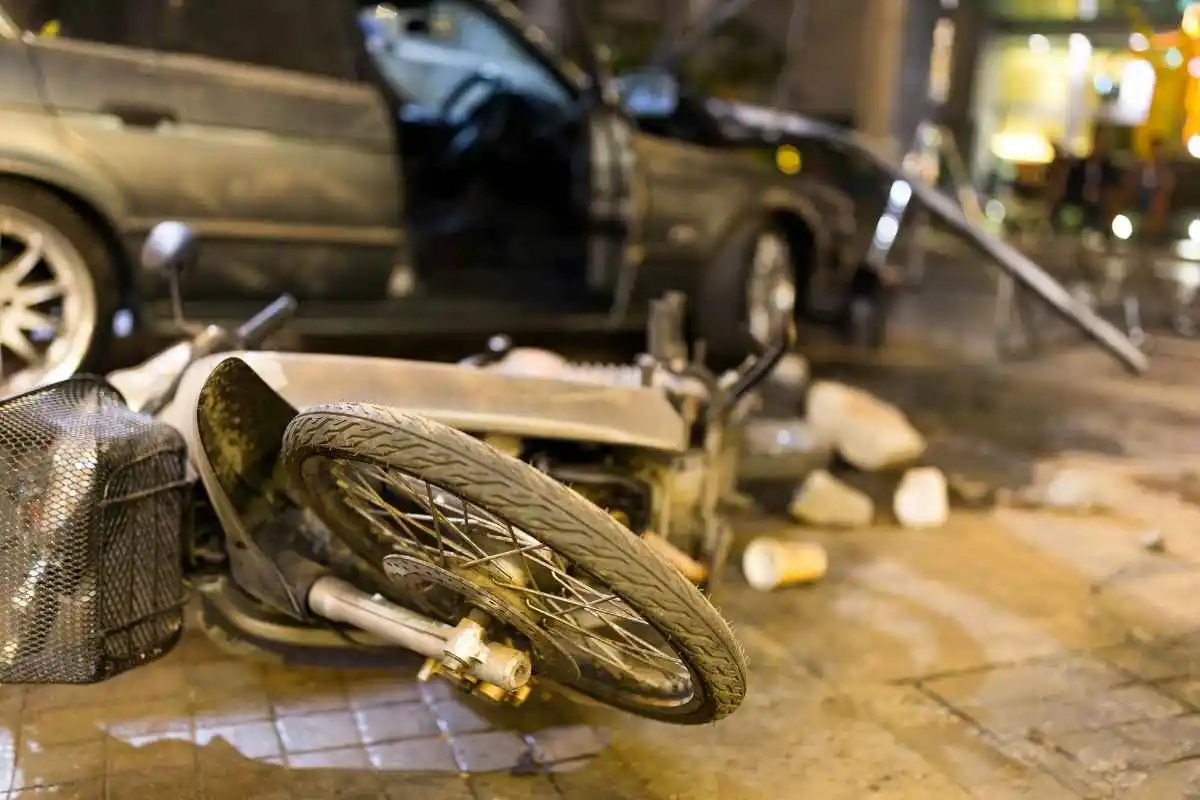
Who May Be Liable for a Motorcycle Crash in California
A California motorcycle crash is not always solely the fault of the driver of another motorcycle or vehicle. Multiple individuals or entities may be liable, depending on factors such as the cause of the accident, the conduct of each party, roadway conditions, and defective equipment. California Civil Code § 1714 generally establishes a person's duty to use ordinary care; failure to exercise that duty may result in an injury to another.
Negligent Driver
The most common situation in which a motorcycle crash occurs is due to the negligence of another driver. Examples include:
- Failure to yield despite the motorcycle having the right of way
- Unsafe lane change
- Distracted driving
- Speeding or an unsafe speed
- Following too closely
- Improper turn
- Driving under the influence (DUI)
- Failure to obey a traffic signal or other traffic law
Evidence of violation of any applicable provision of the California Vehicle Code may be important in determining liability. However, just because a traffic violation occurred does not automatically prove all civil liability; the connection between that conduct and the crash must also be shown.
Multiple Parties May Share Liability
Sometimes more than one party may be responsible for a crash. For example, a driver may hit a motorcycle while making an unsafe lane change, while another vehicle's negligent conduct may have contributed to the chain of events that led to the crash.
In such cases, each party's conduct and percentage of fault are evaluated separately. In a California motorcycle accident claim, it is not just "who hit me," but how the crash occurred and whose negligence contributed to it.
Employer or Company Liability
If a motorcycle crash occurs while an employee is driving work-related, a claim may be made against the employer or company, depending on the circumstances. However, whether the employee was within the scope of the job and what the legal relationship between the driver and the employer was are important facts.
Therefore, if a commercial vehicle, delivery vehicle, or company-owned vehicle is involved, it may be necessary to investigate the role of the company involved rather than just collecting information about the individual driver.
Government Agency for Dangerous Road Conditions
If the cause of the crash is dangerous road conditions, such as a defective roadway, dangerous pothole, or other public property condition, then in some circumstances the question of a claim against the government entity involved may arise.
However, the liability of the government entity is not the same as a typical private-driver negligence claim. Specific rules and statutory requirements of the California Government Claims Act may apply. In particular, claims against government entities are different from those for typical accident claims and often have shorter claim deadlines. The California Department of General Services also cites the requirements of the Government Claims Program for state-vehicle claims.
Motorcycle or Parts Manufacturer
Sometimes a crash may not be caused by driver negligence but by a defective motorcycle or motorcycle part. If a brake failure, defective component, or other product defect caused the injury, a product liability claim against the manufacturer, distributor, or other responsible entity may be relevant.
However, for such a claim, it is not enough to simply state that the motorcycle crashed. It may be necessary to establish a legal connection between the product defect and the injury.
How Is Negligence Established
According to California Civil Code § 1714, liability may arise if a person fails to exercise ordinary care or skill in the care of his person or property and causes injury to another.
Therefore, a motorcycle injury claim generally involves looking at:
- whether the other party owed an applicable duty of care;
- whether the other party exercised reasonable care;
- whether the negligent conduct caused the crash or injury; and
- what damages the motorcycle rider suffered.
This is why evidence such as police reports, photographs, witness statements, surveillance footage, medical records, and applicable California Vehicle Code provisions are important in establishing liability. California courts also emphasize the importance of proof of each required element and the cause of action in motor-vehicle cases.
Official legal reference: California Civil Code § 1714
Which California Motorcycle Laws Can Affect Your Injury Claim
In a California motorcycle injury claim, not only is the crash related to the accident, but also the traffic laws that the rider and other drivers were following at the time of the accident. In particular, helmet use, lane splitting, right-of-way, speeding, lane changes, and insurance coverage—these issues can later be part of a dispute over liability and compensation. However, a violation of a traffic rule does not automatically result in a rider losing a claim; the relationship between the violation and the crash and the comparative fault of each party must be considered separately.
Motorcycle Helmet Requirements — Vehicle Code § 27803
California Vehicle Code § 27803 requires that the driver and passenger wear a required safety helmet when operating a motorcycle, motor-driven cycle, or motorized bicycle. The helmet must meet applicable safety requirements and be properly fastened and securely fitted.
So after a motorcycle crash, questions may arise about whether the rider was wearing a helmet, what the condition of the helmet was, and whether there is a relevant connection between helmet use and the injury.
However, if the other driver was negligent, that driver's potential liability does not automatically disappear just because of the helmet-related issue. Fault and damages must be evaluated separately according to the facts of the claim.
Lane Splitting — Vehicle Code § 21658.1
Lane splitting is an important motorcycle issue in California law. Vehicle Code § 21658.1 defines lane splitting as a situation where a two-wheeled motorcycle passes between a line of vehicles moving or stopped in the same direction. The California DMV also lists lane splitting as legal in California.
However, being legal does not mean being safe or automatically fault-free in all situations. How the motorcycle was splitting lanes at the time of the crash, the speed and surrounding traffic conditions, and how the other driver was operating the vehicle—these facts can be important in the liability analysis.
Right-of-Way, Speeding, and Unsafe Lane Changes
Right-of-way, speeding, unsafe lane changes, improper turns, following too closely, and failure to obey traffic signals can be important in the fault analysis of motorcycle crashes.
For example, if another driver pulls over in front of the motorcycle while it is in the right-of-way or makes an unsafe lane change and hits the motorcycle, that conduct can be important evidence in a claim. Similarly, questions can arise about the speed or riding behavior of the motorcycle rider.
So after a crash, it is important to show, with evidence, which California Vehicle Code provision applies and how that violation caused the crash or was connected to the injury.
How Can a Traffic Violation Affect Your Injury Claim
A traffic violation may be relevant evidence in a fault determination. However, a traffic citation or alleged violation does not automatically determine the outcome of a civil injury claim.
A California motorcycle accident claim may include a combination of police reports, witness statements, photographs, video footage, vehicle damage, road evidence, and applicable traffic law. If both the rider and the other driver were at fault, California's pure comparative negligence rule may reduce the rider's compensation based on his or her assigned percentage of fault.
Motorcycle Insurance and Liability Coverage
In California, motor vehicle owners and drivers are required to maintain financial responsibility. Vehicle Code § 16020 requires drivers and owners to establish financial responsibility and to provide evidence of insurance or other legally permitted forms of financial responsibility.
Currently, the California minimum liability limits for policies issued or renewed on or after January 1, 2025, are:
- $30,000—one person's injury or death
- $60,000—injury or death of two or more persons
- $15,000 — property damage
These limits are reflected in Vehicle Code § 16056, and the California DMV has also published the same minimum limits.
It is important to know these insurance limits because even if another driver is legally liable, the available policy limits may sometimes not be enough to cover all damages.
Uninsured/Underinsured Motorist (UM/UIM) Coverage
If the at-fault driver has no insurance or their liability coverage is insufficient in relation to your damages, your own Uninsured/Underinsured Motorist (UM/UIM) coverage may be relevant.
California Insurance Code § 11580.2 sets forth statutory requirements for uninsured motorist bodily injury coverage.
So it's not enough to just look at another driver's insurance policy after a motorcycle crash. It's important to check your own motorcycle insurance policy for UM/UIM coverage, limits, and applicable terms.
In summary, California motorcycle crash helmet laws, lane-splitting rules, right-of-way, speeding, lane changes, and insurance requirements aren't just traffic-safety rules—in some situations, they can also affect the fault, available coverage, and potential compensation of an injury claim.
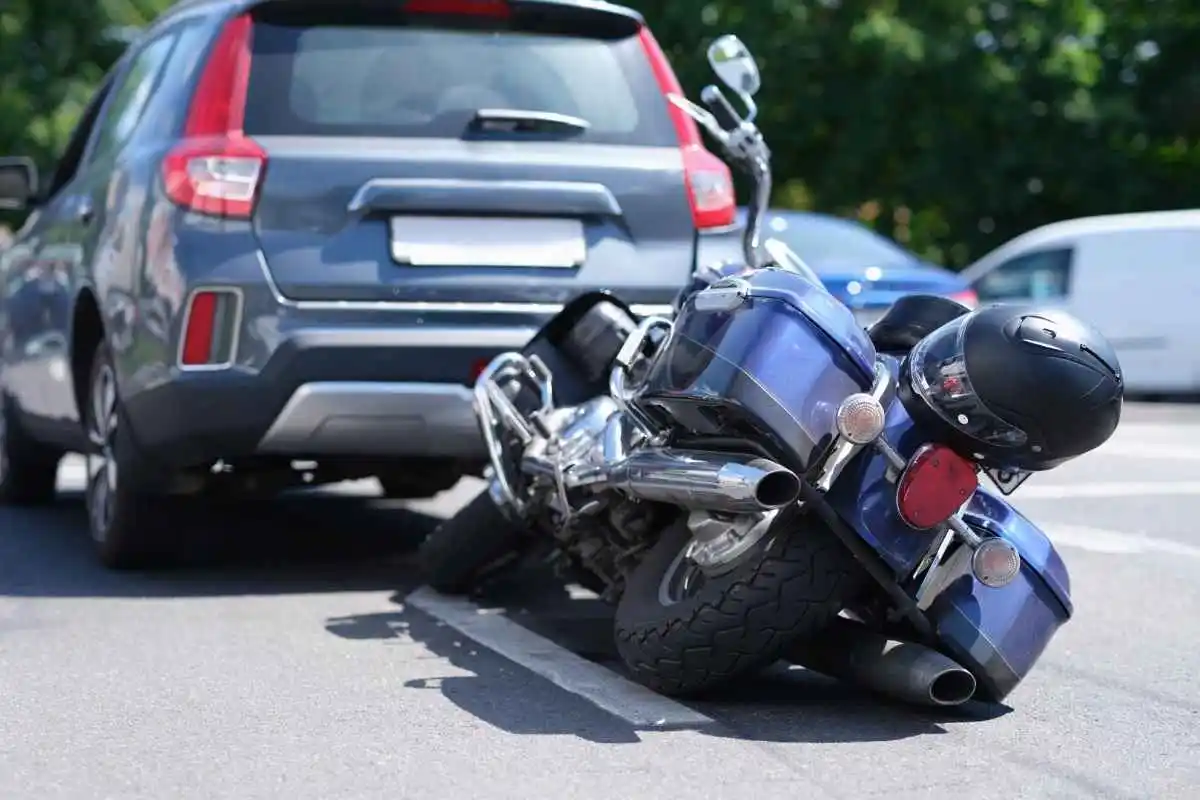
Read more:
Distracted Driving vs Drunk Driving: The Real Danger In California
Who Pays Compensation After a Rideshare Accident in California?
School Bus Accident Injury Claims in California
California Parking Lot Accidents: Hidden Dangers and Liability
How Does Comparative Negligence Affect a Motorcycle Crash Claim
In a California motorcycle accident claim, it is not the case that a rider is partially responsible and will not receive any compensation. California follows a pure comparative negligence system. That is, even if both the rider and the other party were at fault for the crash, the rider can still recover a portion of his or her proven damages. However, the higher the rider's percentage of fault, the lower the recoverable compensation.
California's Pure Comparative Negligence Rule
Under California's comparative negligence rules, if more than one party is responsible for an injury or property damage, each party's percentage of fault may be determined. The California Supreme Court's Li v. Yellow Cab Co. decision was important in establishing the comparative negligence system in California.
The important point here is that California follows pure comparative negligence. That is, even if the rider is more than 50% at fault, he or she may be able to recover for the non-fault portion of the damages.
Can You Recover Compensation If You Were Partly at Fault
Yes. Let's say a rider's total damages in a California motorcycle crash are $100,000, and after investigation, the rider is found to be 30% at fault and the other driver is found to be 70% at fault.
In this case, the rider's $100,000 in damages would be reduced by 30%:
$100,000 − 30% = $70,000
That is, the rider could potentially recover $70,000. Even if the other driver was 70% at fault, it would still have an impact on reducing the rider's percentage of responsibility compensation.
However, the actual settlement or court award will depend on the liability evidence, damages, and applicable insurance coverage.
What Fault May Be Alleged Against a Motorcycle Rider
After a motorcycle crash, the insurance company may make various allegations against the rider. For example:
- Speeding or unsafe speed
- Unsafe lane splitting
- Improper lane change
- Failure to yield
- Traffic signal violation
- Failure to maintain proper lookout
- Failure to comply with helmet requirement
However, making an allegation does not automatically make it true. The actual conduct of each party must be verified with police reports, photographs, video footage, witness statements, vehicle damage, and roadway evidence.
It is especially important to distinguish between helmet issues and liability issues. Even if there is an allegation that the rider was not wearing a helmet, how it related to the cause of the crash and the claimed injuries can depend on the facts.
How Can Evidence Challenge an Insurer's Fault Assessment?
If the insurance company wants to impose a higher percentage of fault on the rider, it is important to examine the supporting evidence for their assessment. For example, if the insurer claims the rider was speeding, dashcam footage, traffic-camera footage, eyewitness testimony, skid marks, vehicle damage, and accident reconstruction evidence can help substantiate that allegation.
Similarly, if the insurer alleges unsafe lane splitting, it is necessary to consider the exact position of the motorcycle at the time of the crash, the movement of the other vehicle, traffic conditions, and applicable Vehicle Code provisions.
Therefore, the insurance adjuster's fault percentage does not need to be considered final. Liability can be disputed based on evidence.
Finally, comparative negligence does not automatically end a motorcycle rider's claim. Rather, the key question is what percentage of fault each party was at and how that fault relates to the claimed damages. Having strong evidence to determine this percentage is crucial for a motorcycle injury claim.
What Compensation Can You Recover After a California Motorcycle Crash
Compensation for an injured rider after a California motorcycle crash is not limited to medical bills. If the injury results in medical treatment, income loss, property damage, and physical or emotional suffering, a variety of economic and non-economic damages may be claimed, depending on the circumstances.
Medical Expenses and Future Care
Emergency treatment, hospital bills, doctor's visits, medication, surgery, diagnostic tests, and necessary rehabilitation can be claimed as medical expenses. Future medical expenses may also be recoverable if medically necessary treatment or rehabilitation is required in the future due to the injury.
California Civil Code § 3333 provides compensation for loss or harm resulting from personal injury.
Lost Wages and Future Earning Capacity
Lost wages can be claimed if you are unable to work or lose income due to your injury. If a serious injury reduces a rider's ability to work or earn potential in the future, loss of future earning capacity may also be part of the claim.
Income records, employment information, and injury-related work limitations can be important in proving such damages.
Motorcycle and Other Property Damage
If a motorcycle is damaged in a crash, you may be able to claim compensation for reasonable repair costs or, under the applicable circumstances, for the loss of the motorcycle. Damage to a helmet, riding gear, or other personal property may also be part of the claim.
Therefore, photographs, repair estimates, invoices, and property-damage records should be preserved.
Pain and Suffering
Pain and suffering can include physical pain, discomfort, and mental suffering resulting from the accident. California law considers losses such as physical pain, mental suffering, and emotional distress to be non-economic damages.
Compensation may be claimed depending on the circumstances, even if the injury resulted in emotional distress, loss of enjoyment of life, or other non-economic harm.
Wrongful Death Compensation
If a victim dies as a result of a motorcycle crash, eligible surviving family members may file a wrongful death claim. California Code of Civil Procedure § 377.60 allows certain individuals to bring this type of action. Depending on the circumstances, funeral and burial expenses, loss of financial support, and other legally permitted damages may be recoverable.
UM/UIM Coverage
If the at-fault driver does not have insurance or if his or her policy limits are not sufficient to cover the damages, owning Uninsured/Underinsured Motorist (UM/UIM) coverage may be important. California Insurance Code § 11580.2 sets out the statutory framework for this coverage.
However, recovery will depend on the policy limits and the applicable terms of the insurance policy.
How Insurance Policy Limits Affect Compensation
Even if your actual damages exceed the policy limits, you may not be able to recover more than that limit from the at-fault driver's insurance. Therefore, in addition to calculating medical expenses, lost income, property damage, physical and emotional distress, and future damages, it is important to look into available insurance coverage.
It is also important to review your own UM/UIM coverage and that of any other potentially liable parties. Additionally, if the rider is partially at fault, the final amount of compensation may be reduced based on comparative negligence.
So, assessing motorcycle accident compensation doesn't just include medical bills—it also includes current and future financial losses, property damage, physical and emotional distress, and available insurance coverage.
How Long Do You Have to File a Motorcycle Accident Claim in California
It is very important to file a claim or lawsuit within the legal deadline after a California motorcycle crash. If the deadline has passed, you may lose your chance to recover from the court, even if you have a valid claim.
| Personal injury | Generally 2 years under California Code of Civil Procedure § 335.1. |
| Property damage | Generally 3 years under California Code of Civil Procedure § 338. |
| Government entity | Generally 6 months to file a government claim under Government Code § 911.2; additional deadlines may apply after that for lawsuits. |
| Wrongful death | Generally 2 years from the date of death under CCP § 335.1. Standing to file is governed by CCP § 377.60. |
There may be exceptions or deadline extensions in some circumstances, so the deadline may vary based on specific facts.
Because of these deadlines, it is important to quickly preserve police reports, medical records, photographs, witness information, and other evidence after a crash. If there is serious injury, disputed liability, or a government entity is involved, it may be beneficial to speak with a California motorcycle accident lawyer quickly to understand the deadlines and legal options.
California Code of Civil Procedure § 335.1
Conclusion
The impact of a motorcycle accident in California is not limited to the scene of the accident or the immediate medical treatment. Evidence, California motorcycle laws, liability, comparative negligence, insurance coverage, damages, and legal statutes of limitations—all of these can play a role in the outcome of your motorcycle accident claim.
So, prepare the necessary reports after the accident, preserve medical records and evidence, and be careful when talking to your insurance company. Having a quick idea of your legal rights and applicable statutes of limitations can help you make a more informed decision about your claim.
Frequently Asked Questions About California Motorcycle Crashes
What should I do if the other driver was at fault?
Call 911, get immediate medical treatment, take pictures and videos of the accident scene, gather witness and insurance information, and preserve all evidence. Avoid admitting fault or accepting a settlement without understanding.
Can I recover compensation if I was partly responsible?
Yes. California follows pure comparative negligence. So even if you are partly at fault, you can get compensation, but damages will be reduced based on your percentage of fault.
Does not wearing a helmet affect my motorcycle accident claim?
This can be an issue in your claim, especially if the injury was related to helmet use. California Vehicle Code § 27803 requires motorcycle riders and passengers to wear compliant helmets.
Is lane splitting legal in California?
Yes. California Vehicle Code § 21658.1 defines lane splitting as operating a motorcycle through a line of vehicles moving in the same direction or stopped. However, the rider's riding behavior may affect the fault analysis depending on the circumstances of the crash.
What if the at-fault driver has no insurance?
You may be able to get compensation from your Uninsured Motorist (UM) coverage, if applicable. Underinsured Motorist (UIM) coverage may also be relevant if the at-fault driver's insurance is not sufficient to cover the damages. This depends on the policy terms and coverage limits.
How long does a motorcycle accident claim take?
There is no set time frame. Depending on the severity of the injury, medical treatment, liability dispute, evidence, insurance negotiation, and litigation if the case goes to court, the time can be several months or longer.
Should I accept the insurance company's first settlement offer?
Of course not. Before accepting the offer, you should consider whether it adequately covers medical expenses, lost income, property damage, pain and suffering, and potential future losses. Accepting a settlement may limit your ability to seek additional compensation later.
Do I need a California motorcycle accident lawyer?
A lawyer is not required for every claim. However, if there is serious injury, disputed liability, multiple at-fault parties, an insurance dispute, or government entity involvement, legal guidance from a California motorcycle accident lawyer may be important.