Distracted Driving vs Drunk Driving: The Real Danger In California
Distracted driving and drunk driving (DUI) are both extremely dangerous on California roads. But research shows that severe distraction, like texting, can slow a driver's reaction time even more than being drunk. According to the California Highway Patrol (CHP), distraction and drinking are two of the leading causes of road accidents. Below is a comparative look at the risks, statistics, and legal consequences of these two types of driving on California roads.
California Accident Statistics: Distracted vs. Drunk Driving
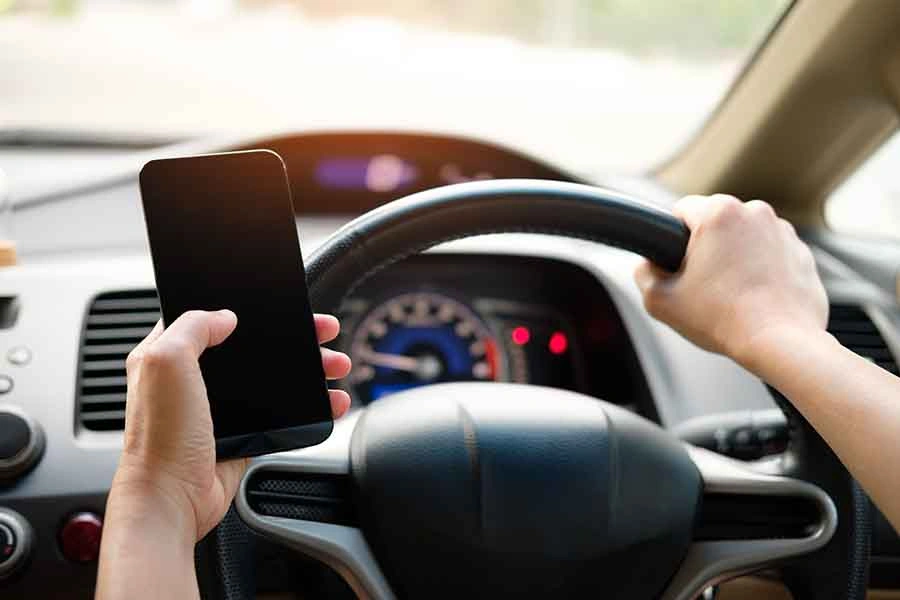
According to the California Office of Traffic Safety, a large share of injury crashes in the state are caused by distracted driving. In recent years, drunk driving alone has killed more than 1,300 to 1,400 people in California every year — almost a third of all traffic deaths in the state. At the same time, accidents caused by phone-related distraction are also rising year after year as phone use increases. Yet under California Vehicle Code § 23123.5, holding and using a phone by hand while driving is illegal.
According to the latest annual data from the National Highway Traffic Safety Administration, 3,208 people died in distracted driving crashes across the United States — a number almost equal to drunk driving deaths.
What Distracted Driving and Drunk Driving Actually Mean
Before comparing the two, it helps to know what these terms mean under California law. Distracted driving means any activity that takes your attention away from driving. Drunk driving means driving specifically after drinking alcohol or using drugs, beyond the legal limit.
Types of Distracted Driving
Any action that takes a driver's attention away from the road counts as distracted driving. If you send or read a text while driving at 55 miles per hour, your eyes stay off the road for about 5 seconds. According to NHTSA, in that time you cross a distance equal to a football field without watching the road at all. Distraction comes in three forms:
- Visual: taking your eyes off the road to look at something else, like a phone screen.
- Manual: taking your hands off the wheel to do something else, like eating or applying makeup.
- Cognitive: thinking deeply about something other than driving.
What Falls Under Drunk Driving
When alcohol reduces a driver's normal mental and physical ability, driving in that state is called drunk driving — legally, DUI (Driving Under the Influence). Compared to distracted driving, the legal limit for drunk driving is much more clearly defined.
- Regular drivers 0.08% BAC or higher
- Commercial drivers 0.04% BAC or higher
- Drivers under 21 Any measurable amount
A driver does not need to look visibly drunk for a DUI charge to apply. Long before blood alcohol reaches 0.08%, a person's reaction speed, judgment, and coordination already start to decline. So even if a driver seems normal from the outside, they may already be impaired on the inside.
How Distraction and Alcohol Impair Reaction Time
When you look at both behaviors side by side, the way a driver becomes impaired or distracted may differ, but the result on the road is nearly the same: the driver cannot react in time to avoid an accident.
How Distracted Driving Impairs Driving Ability
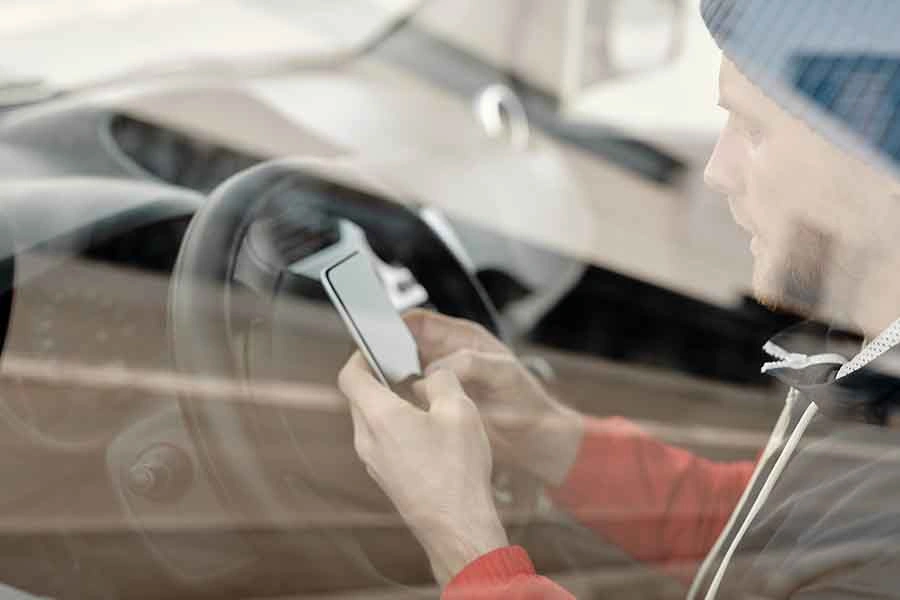
Distraction means your mind is divided between multiple tasks at once. When you look at your phone, your brain fully shifts attention away from the road, and that attention does not return instantly the moment you put the phone down.
Research from the AAA Foundation for Traffic Safety found that mental distraction can linger for about 27 seconds after you put the phone away, even with hands-free calls. Simply not holding the phone isn't the only solution.
- Tunnel vision: When a driver looks at a phone screen or texts while driving, their eyes fully leave the road ahead. This is called Inattentional Blindness, where the driver's eyes fail to register a car braking ahead or a pedestrian stepping into the road.
- Delayed braking: Under normal conditions, a driver takes a certain amount of time to hit the brakes. When attention is disrupted by a phone, this time can more than double, increasing the stopping distance needed to slow down.
- Lane drifting: Taking one hand off the wheel to hold a phone or do something else can cause a car to drift out of its lane without the driver noticing, creating a risk of a head-on collision.
How Drunk Driving Impairs Driving Ability
Alcohol creates problems in many areas at once: vision narrows, reaction time slows, body coordination weakens, and judgment declines. Even a blood alcohol level of just 0.05% reduces a driver's ability to track moving objects and respond to sudden danger. At 0.08%, the impairment becomes so severe that the law treats the driver as fully impaired.
Both behaviors take away a driver's awareness of their surroundings and their ability to react quickly. The difference is that alcohol impairs a driver from the moment it enters the bloodstream, while distraction happens only at certain moments.
- Slow processing: Alcohol slows down the brain's ability to process information. When a traffic light turns red or the car ahead suddenly slows, a drunk driver's brain takes much longer to register the danger signal.
- Poor coordination: Drinking damages the coordination between the eyes, hands, and feet. A driver may want to brake, but their foot cannot press the pedal at the right time or with the right force.
- Impaired vision: Alcohol slows down how quickly the pupils expand or contract. As a result, a driver's ability to see distant objects, peripheral vision, and night vision all decline significantly.
- Risk-taking behavior: Alcohol clouds judgment and creates a false sense of confidence. As a result, a driver may make reckless decisions such as speeding, overtaking dangerously, or ignoring traffic laws.
California's Laws and Penalties for Distracted Driving and Drunk Driving
California treats both behaviors as serious violations, but the penalties differ greatly. Understanding where the state's law stands on each helps you see what penalty an at-fault driver may face, and how that affects your injury claim.
California's Penalties for Distracted Driving
Under California Vehicle Code § 23123.5, a driver cannot hold or touch a phone or other electronic device while driving, even while stopped at a traffic signal or red light. A first offense starts with a fine of $162, and repeat offenses within 36 months can rise up to $285.
This fine may seem much smaller than the penalty for drunk driving. But if the same driver is caught using a phone a second time within 36 months, 1 point is added to their driving record, which can raise car insurance premiums by about 45% to 51%. In most cases, distracted driving is treated as a minor violation. However, if it causes injury or death, prosecutors can file more serious charges, even for involuntary manslaughter.
California's Penalties for Drunk Driving
Under California law (including AB 366 and AB 321), the severity of the penalty depends on whether the offense is a repeat one.
First DUI (1st offense misdemeanor)
- Court fines: the base fine ranges from $390 to $1,000, but with court costs and added penalty assessments, the total usually reaches $1,800 to $3,000 or more.
- License suspension: the license can be suspended immediately for 6 months. After a mandatory 30 days without driving, a restricted license may become available — but if it's a commercial license, BAC is 0.15% or higher, or the driver refused a chemical test, the suspension is a full year. If a child under 14 was in the car, an extra mandatory 48 hours in jail is added, which cannot be waived or reduced.
- Jail time: usually 48 hours up to a maximum of 6 months in county jail, though most first-time offenders receive probation or community service instead of jail.
- Mandatory DUI school: a state-approved 3-month alcohol education program is required. But if BAC is 0.20% or higher, or the driver refused a chemical test, the judge may require a 9-month program (AB 1353) instead.
- Ignition Interlock Device (IID): a special breathalyzer connected to the car that checks the driver's breath for alcohol before the engine can start. The driver must install this device in their car at their own expense.
Second or third DUI (repeat offenses)
If a person commits a second or third DUI within 10 years, the offense becomes far more serious:
- Up to 1 year in county jail
- License fully revoked or suspended for 1 to 2 years
- A long-term DUI rehabilitation program (18 to 30 months) must be completed
Felony DUI
If a drunk driver causes an accident that injures or kills another person, or already has 3 or more prior DUI convictions, the offense is treated directly as a felony — the most serious level of criminal charge:
- 16 months to several years in California state prison
- The driving license may be revoked permanently or for a long period, such as 4 years
Under the new 2026 legal reforms, if someone dies because of drunk driving (DUI manslaughter), the minimum probation or supervision period has been increased to 3 to 5 years.
What to Do After a DUI or Distracted Driving Accident in California
Whether the other driver was texting or drunk, how much compensation you receive often depends on what you do right after the accident. Evidence in these cases disappears quickly — police reports get filed away, witnesses leave, and phone records can be deleted or lost if no one requests them in time. So acting quickly and correctly makes your case much stronger.
Make sure everyone is safe
If possible and the car still runs, move it to a safe lane away from traffic and turn on the hazard lights. Check yourself and any passengers for injuries.
Call emergency services right away
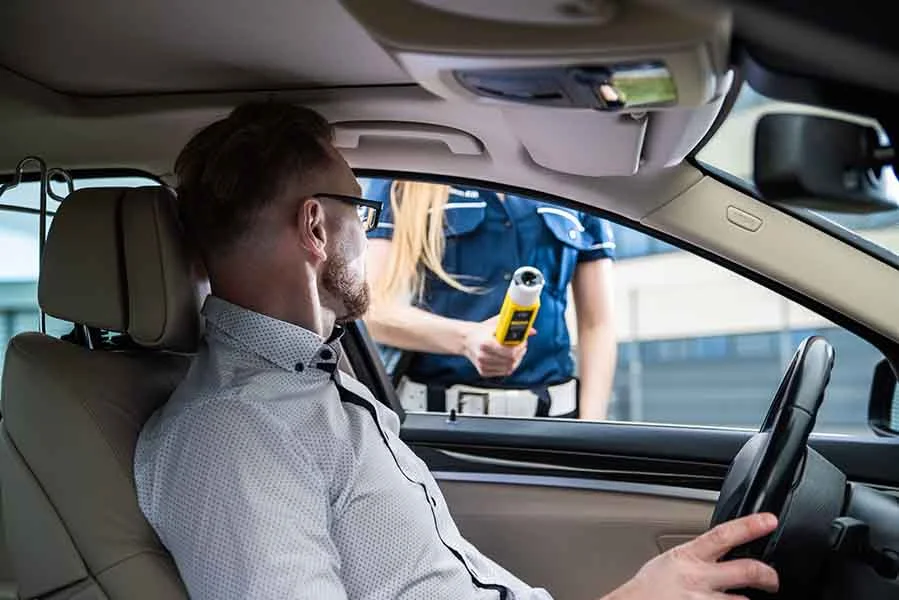
In California, a police report is required for any accident involving a drunk or seriously distracted driver. Tell the police clearly if you believe the other driver was drunk or distracted by texting — the officer will conduct a breathalyzer or field sobriety test at the scene, which will count as legal evidence.
Collect information and evidence at the scene
From a safe distance, take photos of the damage to both vehicles, license plates, the surrounding road, skid marks, and traffic signals. Collect the other driver's name, phone number, driver's license number, and insurance policy details. If any pedestrians or other drivers witnessed the accident, write down their names and contact numbers.
Do not admit fault
Do not argue with the other driver or their insurance agent about what caused the accident. Only give accurate information to the police and medical staff.
Avoid even saying "I'm sorry" out of politeness, because California law and insurance companies may treat this as an admission of fault.
Get a medical evaluation
Even if you feel no pain right after the accident, visit an emergency room or urgent care within 24 hours to get checked. In California, insurance companies base compensation on medical records — if you delay treatment, they may argue your injury wasn't caused by the accident.
Report according to California's rules
If the accident causes injury, death, or more than $1,000 in property damage, you must file the California DMV SR-1 Form within 10 days, and notify your own insurance company about the accident right away.
Conclusion
Distracted driving and drunk driving are equally dangerous on California roads, even though they happen in different ways. Alcohol fully impairs a driver's body and brain function, while looking away at a phone or something else causes a temporary but equally severe delay in reaction. Though the law treats the penalties differently, if someone is injured or killed, the driver can face serious criminal and financial consequences either way.
If you have been in an accident where the other driver was drunk or distracted by their phone, quickly and properly preserving evidence at the scene and getting medical care will make your compensation claim much stronger. The faster evidence disappears, the harder it becomes to get fair compensation. That is why consulting an experienced personal injury attorney soon after an accident is an important step in protecting your rights.