How Pre-existing Conditions Affect Compensation in California?
When claiming compensation after an accident in California, a pre-existing condition is one of the most discussed and most complicated issues. If you had back pain, an old injury, or even age-related wear and tear before the accident, insurance companies may use it as an excuse to deny your compensation.
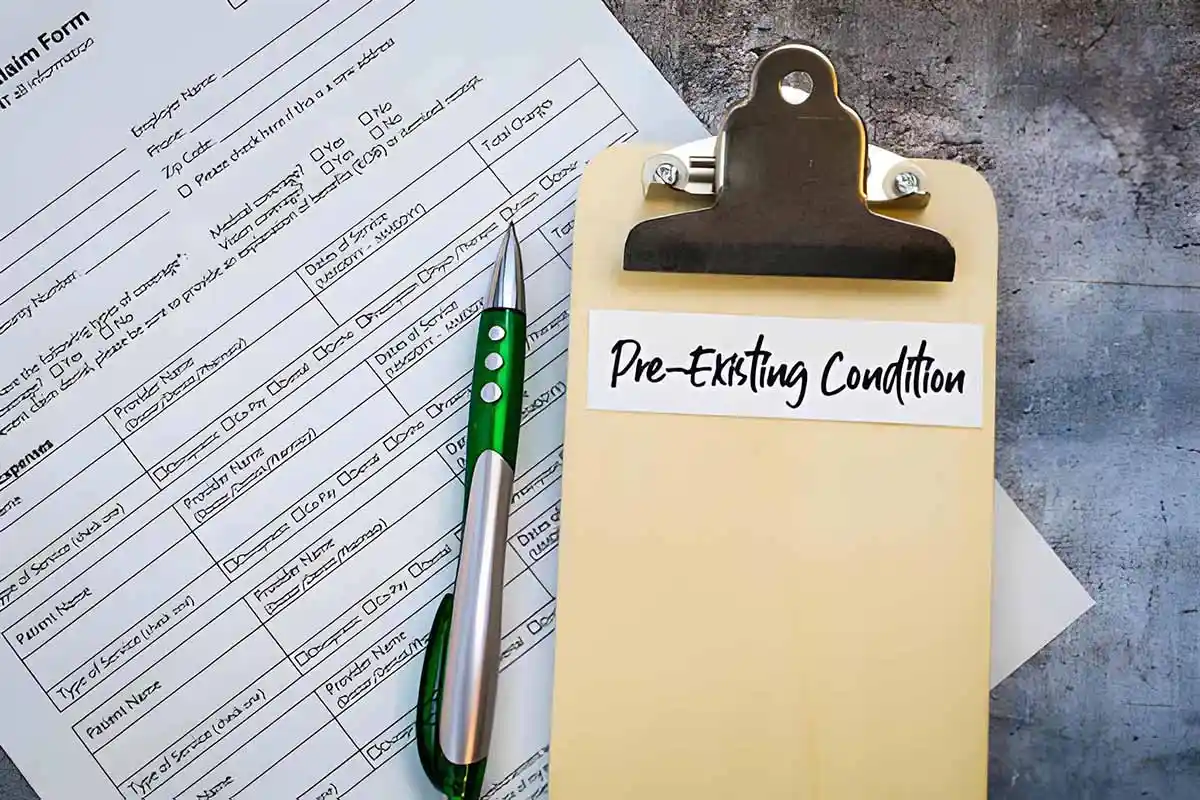
However, California personal injury law says something entirely different. Thanks to legal principles such as CACI No. 3927 and the Eggshell Plaintiff Doctrine, you have the legal right to fair treatment despite your physical vulnerabilities. So in today's article, we will discuss:
If you were ever the victim of an accident where you had a pre-existing condition, I hope this article will be extremely helpful to you.
What Does a Pre-existing Condition Mean?
A pre-existing condition refers to any physical or mental illness or health condition that existed in your body before the current accident. Put simply, any disease or injury you had before you were involved in a new car accident or any other accident is a pre-existing condition. In personal injury cases, these can be divided into three main categories:
1. Old Trauma or Injury
If you had a major injury in the past that never fully healed, or that still requires regular treatment or medication, it falls into this category. For example, a bone broken in an accident several years ago that still has a pin or plate in it or occasionally causes pain. Or an old sports injury, or a torn knee ligament (such as an ACL tear) that may require surgery in the future.
Besides physical injuries, mental health problems or trauma that existed before the start of an insurance policy are also considered pre-existing conditions. For example, PTSD (Post-Traumatic Stress Disorder) caused by a major accident, or long-standing depression or anxiety caused by a traumatic event in the past.
2. Long-term or Chronic Health Problems
Chronic health conditions refer to diseases or physical conditions that typically last for one year or more, do not go away easily over time, and require regular medical care, medication, or lifestyle changes to keep under control.
In insurance and medical terms, although these diseases cannot be completely cured, they can be kept under control through treatment. They are considered the most common pre-existing conditions. Examples include diabetes, thyroid disorders, heart disease, asthma, and so on.
3. Age-related Physical Changes
Age-related physical changes refer to the natural changes in the organs and various functions of the body that come with aging.
This is not a disease, but a natural biological process of human life. However, when some age-related changes become severe or require regular treatment, they may be considered pre-existing conditions in health insurance. Examples include changes in bones and joints, loss of vision and hearing, and decline in memory and brain function.

What Does California Law Say About Pre-existing Conditions?
Under California personal injury law, no person may be subjected to discrimination or financial deprivation on the basis of a pre-existing physical or mental illness. The law handles this matter with great seriousness through two specific legal principles.
1. The Judicial Council's Jury Instruction
California's civil jury instruction, CACI No. 3927, directly governs this matter. Under this instruction, the judge tells the jury clearly that the injured person will not receive compensation for physical or mental conditions that existed before the accident.
However, if the plaintiff's pre-existing problem became worse or more severe because of the wrongful conduct of the responsible party, the jury must determine an amount of compensation that is fair and reasonable for that additional harm.
2. The Eggshell Plaintiff Doctrine
California law strictly follows the Eggshell Plaintiff Doctrine. Under this instruction, the judge tells the jury that if the plaintiff, because of a pre-existing disease or weakness, was injured more easily and more severely than an ordinary healthy person would have been, the defendant must still bear full responsibility. The defendant cannot in any way make the excuse that an ordinary healthy person would not have been so badly hurt in this accident, and therefore they will not pay full compensation.
Suppose an accident that would have done nothing to an ordinary person left you seriously injured because your bones or discs were already weak. The responsible party cannot legally say, "Your body was already weak, so I am not liable." No matter how unmanageable or large the harm is because of your fragile health, the responsible party must bear the full responsibility for all of that additional harm.

How Do Insurance Companies Use Your Pre-existing Condition?
Insurance companies use your old injuries as a "weapon," mainly to reduce the amount of your compensation as much as possible or to cancel your claim altogether. Although California law protects victims, insurance adjusters use clever legal and psychological tactics. Insurance companies typically try to use your old injuries against you in the following 5 ways:
1. Denying Liability
The insurance company's most common argument is that the accident is not responsible for your current physical suffering or pain. They claim that your problem already existed and that you would have had the same pain even without the accident.
2. Demanding Blanket Medical Records
After the accident, the insurance company will ask you to sign a form so that they can see your medical history. They don't want to see only the records of the current accident; they want to go through your entire medical history for the past 5 to 10 years. If there is ever even a slight mention of back pain or neck pain, they will blow it out of proportion and claim, "You've had this problem for a long time."
3. Pointing to Natural Deterioration or Age-related Causes
If you have a condition such as arthritis or degenerative disc disease, the insurance company will argue that it was naturally getting worse with age. They will say that this severe pain has no connection to the accident and is simply ordinary physical degeneration.
4. Claiming You Would Have Needed the Treatment Anyway
If you need major surgery or long-term therapy after the accident, they may argue that you would have had to undergo this treatment anyway because of your old problem. They will say the accident only brought that timing forward a little, so they refuse to pay the full treatment bills.
5. Trapping You in a Recorded Statement
Right after the accident, they will want to take a phone interview or recorded statement from you. If they ask, "Are you completely fine?" and you carelessly say "yes," they will later pull out your previous medical records, try to prove you a liar, and destroy the credibility of your entire case.
Do not sign any medical release form from an insurance company without the advice of a lawyer. Instead of speaking to insurance adjusters yourself, let your personal injury lawyer speak on your behalf.
5 Ways to Strengthen Your Compensation Claim If You Have a Pre-existing Condition
To strengthen your accident compensation claim in California despite a pre-existing condition, your main tools are the right evidence and the right strategy. To keep the insurance company from using your earlier injury as an excuse, you need to take some specific steps from day one. Here are 5 highly effective steps to strengthen your claim:
1. Be Completely Honest from the Start
Never hide your earlier injury from your lawyer or your doctor. If you withhold information at the start and the insurance company later finds it in your medical records, they can prove you dishonest and cancel the entire claim. If you honestly disclose the earlier injury from the beginning, it becomes easier to take advantage of the Eggshell Plaintiff Rule legally.
2. Prove the Severity of the Injury Through Your Doctor
Speak clearly with your doctor in every session. Explain to the doctor what your life was like before the accident and what it is like now. Collect before-and-after comparisons of X-rays, MRIs, and other diagnostic reports from before and after the accident. Also, make sure your doctor clearly writes in their notes or reports how much your earlier problem has worsened or increased because of the new accident.
3. Do Not Sign the Insurance Company's Blanket Authorization Form
After the accident, insurance companies will ask you to sign a Medical Authorization Form. This is essentially a trap. By signing this form, they gain the legal right to go through all the old medical records of your entire life. Do not sign any such form without a lawyer's advice, and give them only limited and specific information.
4. Keep a Pain and Daily Life Diary
After the accident, write down in a diary how your physical condition is each day. For example: "Although I had mild lower back pain before the accident, I could walk 4 miles every day. Since the accident, I can't sit upright for more than 10 minutes, and I can't sleep at night." This diary will serve as strong evidence of your real suffering before the court and the jury.
5. Maintain Consistent Treatment
Go to therapy and take your medication exactly as your doctor has told you to. If you stop treatment midway or miss doctor's appointments, the insurance company will claim that your pain didn't really increase because of the new accident, and that if it had, you would have been seeing the doctor regularly.

The Statute of Limitations and the Comparative Negligence Rule in California
In claiming compensation after an accident in California, the Statute of Limitations and Pure Comparative Negligence play the two most important legal roles. Here is a detailed description of these two rules:
1. The Time Limit for Filing a Lawsuit
Under California's Code of Civil Procedure (CCP § 335.1), a specific time limit is set for going to court in any personal injury case. Once this time limit has passed, you generally cannot file a lawsuit.
- General personal injury: In cases of road accidents, slip and fall, or other injuries caused by negligence, the lawsuit must be filed within exactly 2 years from the date of the accident.
- Property damage: If a car or other property is damaged in the accident, you have 3 years to claim for it.
- Claims against government entities: If the accident was caused by a government bus, a public road, or the negligence of a government official, California law is extremely strict. In this case, before filing the main lawsuit, an Administrative Claim must be submitted to the relevant government office within 180 days.
- Medical malpractice: In cases of wrongful treatment, you have 1 year from the date the harm or negligence is discovered, or a maximum of 3 years from the date the incident occurred, whichever comes first.
Exceptions to the time limit:
- Minors: If the victim is under 18 years of age, the 2-year time limit generally begins counting after they turn 18.
- Delayed discovery rule: If an injury is not apparent immediately after the accident and appears later, the time may begin counting from the date the injury was first discovered or should have been discovered.
2. The Fault-sharing Rule
California is a Pure Comparative Negligence state. This means that even if you are partly at fault in the accident, you still have the legal right to receive compensation. The court or the insurance company determines a Percentage of Fault based on the mistakes of both sides, and your share of the fault is deducted from your total compensation.
Suppose another car hits you from behind (which is mainly the other driver's fault). But at that moment, you were also driving at excessive speed or were late in signaling. After an investigation or a court hearing, the jury decides that you were 20% at fault in this accident and the other driver was 80% at fault.
After calculating your total medical care, lost work wages, and the financial value of your mental suffering, your total compensation is set at $100,000. Under the law, 20% ($20,000) will be deducted from the total because of your 20% fault. As a result, you will receive the remaining $80,000 as compensation.
Conclusion
Having a pre-existing condition in California does not mean the end of your compensation claim. Under CACI No. 3927, if the accident made your old problem worse, you are entitled to compensation for that additional harm. And the Eggshell Plaintiff Doctrine ensures that the responsible party cannot avoid liability just because your body was weak.
But the reality is that the insurance company will try to turn your old medical records into their biggest weapon. They will deny liability, point to age-related wear and tear, or try to trap you in a recorded statement. So it is extremely important to be honest from the start, have your doctor document the worsening of your injury, keep a pain diary, and continue regular treatment.
Your old injury is not your fault, and it cannot be a reason to take away what you rightfully deserve. Without delay, talk to an experienced California personal injury lawyer. Many lawyers offer a free initial consultation and charge a fee only if you win the case.